

- Tổng quan
- Blog
- Tattoo Ideas
- Belly Button Piercing Pain & Healing Time: What to Expect
Belly Button Piercing Pain & Healing Time: What to Expect


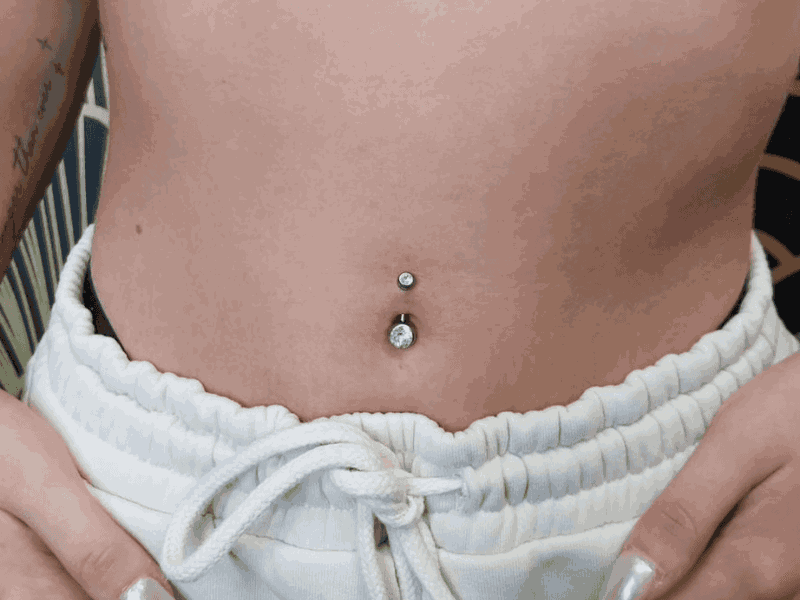
A belly button piercing is one of the most requested piercings among travelers and expats passing through Vietnam — bold, easy to dress up or hide, and quick to do. Still, two questions come up in almost every consultation: does it actually hurt, and how long before it stops looking irritated and finally settles down? This guide walks through realistic pain levels, healing timelines, and the warning signs worth watching for, so you can book your appointment informed instead of anxious.
Does a Belly Button Piercing Hurt?
The navel sits on thinner, more sensitive skin than an earlobe, so most people feel a sharper pinch than they expect the first time the needle passes through. The good news is that the actual piercing takes only a few seconds. Most of the discomfort people remember afterward is anticipation rather than the moment itself.
Technique matters more than location on the body. A skilled piercer uses a sterile, single-use needle rather than a spring-loaded gun, works in one smooth motion, and talks you through each step so your muscles stay relaxed instead of tensing up. Breathing out slowly as the needle passes, rather than holding your breath, also takes the edge off the sensation noticeably.
Pain tolerance is personal, so two people can walk out of the same chair with completely different stories. What every studio can control, though, is hygiene and precision — and that has far more influence on your comfort, both during the appointment and in the weeks after, than anything else.

How Long Does a Belly Button Piercing Take to Heal?
Compared with an earlobe, which typically settles in six to eight weeks, a navel piercing is on the slow end of the healing scale — usually six to twelve months before it’s fully closed internally and stable. The area folds every time you sit, gets covered by waistbands and swimwear, and traps sweat more easily than most piercing sites, all of which slow things down.
Your own healing time depends on skin sensitivity, general health, and above all how consistently you clean the piercing. Travelers who keep up a simple saline routine and avoid unnecessary friction from clothing tend to heal faster and with far fewer flare-ups than those who forget about it for weeks at a time.
When Can You Safely Change the Jewelry?
Six months is the earliest most studios recommend swapping the original jewelry, and even then it’s worth confirming with your piercer that the tract looks fully formed first. Changing too early risks trapping bacteria inside a channel that hasn’t finished healing, or the hole partially closing before new jewelry goes in.
For your first change, let a professional do it rather than attempting it yourself at home. They can check the piercing is healthy, recommend the right gauge and material, and insert the new piece without unnecessary irritation to skin that is still settling.
Risks Worth Knowing Before You Book
- Infection: the navel is a natural fold that collects sweat and lint, so bacteria has more opportunity to build up than at drier piercing sites. Sterile equipment and a disciplined cleaning routine are your best defense.
- Allergic reaction: some people react to nickel or other alloys in cheap jewelry, showing up as itching, redness, or a rash around the piercing. Surgical steel, titanium, or gold are safer starter choices.
- Keloid or hypertrophic scarring: inconsistent aftercare or a predisposition to raised scarring can leave thickened tissue around the hole, which is harder to treat the longer it’s left.
None of this is meant to replace medical advice. If you notice spreading redness, ongoing fever, or thick, discolored discharge, see a doctor or your piercer promptly rather than waiting it out.
Choosing a Studio You Can Trust
Su Tran Tattoo Studio runs every piercing appointment on single-use needles and hospital-grade sterilization, with staff who explain aftercare in plain English before you leave the chair — which matters if you’re a visitor who won’t have easy access to a follow-up clinic once you’ve moved on to the next city.
If you’re mapping out your trip, you can book piercing in Hanoi before heading north, or piercing in Ho Chi Minh City if the south is your base — either studio follows the same sterile protocol and jewelry standards.

Frequently Asked Questions
How much does a belly button piercing cost in Vietnam?
Pricing varies by studio and jewelry choice, but a professional navel piercing with quality surgical steel or titanium jewelry generally sits in a comparable range to what you’d pay in most Western cities. Ask for the total price, including jewelry, before you sit down.
Can I swim or exercise after getting my belly button pierced?
It’s best to avoid pools, the ocean, and saunas for at least the first few weeks, since standing water carries bacteria that fresh piercings are especially vulnerable to. Light exercise is usually fine as long as clothing doesn’t rub directly against the jewelry.
What jewelry material is safest for a new piercing?
Implant-grade titanium, surgical steel, or solid gold are the safest starting options, since they carry the lowest risk of triggering an allergic reaction. Avoid nickel-heavy costume jewelry until the piercing is fully healed, and even after that if your skin tends to react.
Is a little bleeding or clear discharge normal?
A small amount of bleeding right after the piercing, or a thin clear-to-yellowish fluid that dries into a crust during the first weeks, is a normal part of healing. Thick yellow or green discharge, a foul smell, or increasing pain is not normal and should be checked by a professional.
BÀI VIẾT LIÊN QUAN

Fineline Tattoo Là Gì? Tất Tần Tật Về Hình Xăm Nét Mảnh Từ A Đến Z
22 Tháng 9 2026

Stamp, Lantern & Hand Fan Tattoo: Khi Những Vật Nhỏ Bé Kể Chuyện Lớn
21 Tháng 9 2026

Asian Big Pieces Tattoo Là Gì? Kinh Nghiệm Chọn Hình Xăm Lớn Phong Cách Á Đông
20 Tháng 9 2026

Vietnam Inspired Tattoo: Khi Hình Xăm Mang Hồn Cốt Việt Nam
19 Tháng 9 2026

Xăm Á Đông Kích Thước Nhỏ & Vừa: Chọn Mẫu Sao Cho Đẹp Và Bền Nét
18 Tháng 9 2026

Healed Work Tattoo Là Gì? Vì Sao Hình Xăm Đã Lành Mới Nói Lên Tất Cả
17 Tháng 9 2026