

- Home
- Blog
- Tattoo Ideas
- Asian Traditional Tattoo: Meaning, Symbolism & Where to Get One in Hanoi
Asian Traditional Tattoo: Meaning, Symbolism & Where to Get One in Hanoi


What Is an Asian Traditional Tattoo?
An Asian traditional tattoo is a style rooted in East Asian art history, drawing on Japanese irezumi and Chinese ink painting traditions to depict mythological creatures, nature, and folklore through bold linework, dynamic composition, and symbolic color choices. The style typically features large-scale motifs such as dragons, tigers, koi fish, phoenixes, peonies, and cresting waves, often arranged to flow naturally around the body’s contours rather than sit as isolated images. At Sutran Tattoo Studio in Hanoi, this style remains one of the most requested categories because it balances powerful visual storytelling with deep cultural meaning.
Origins and Meaning Behind the Style
Asian traditional tattooing traces back centuries, influenced by Japanese woodblock printing (ukiyo-e), Chinese mythology, and regional folk beliefs across East and Southeast Asia. Each creature or plant carries symbolic weight: dragons represent power, wisdom, and protection; tigers signify courage and authority; koi fish symbolize perseverance and transformation; peonies stand for wealth and honor; and waves often represent life’s constant change. These meanings are why clients rarely choose the style purely for aesthetics — the imagery is meant to tell a personal story.
Dragons in Asian Tattoo Art
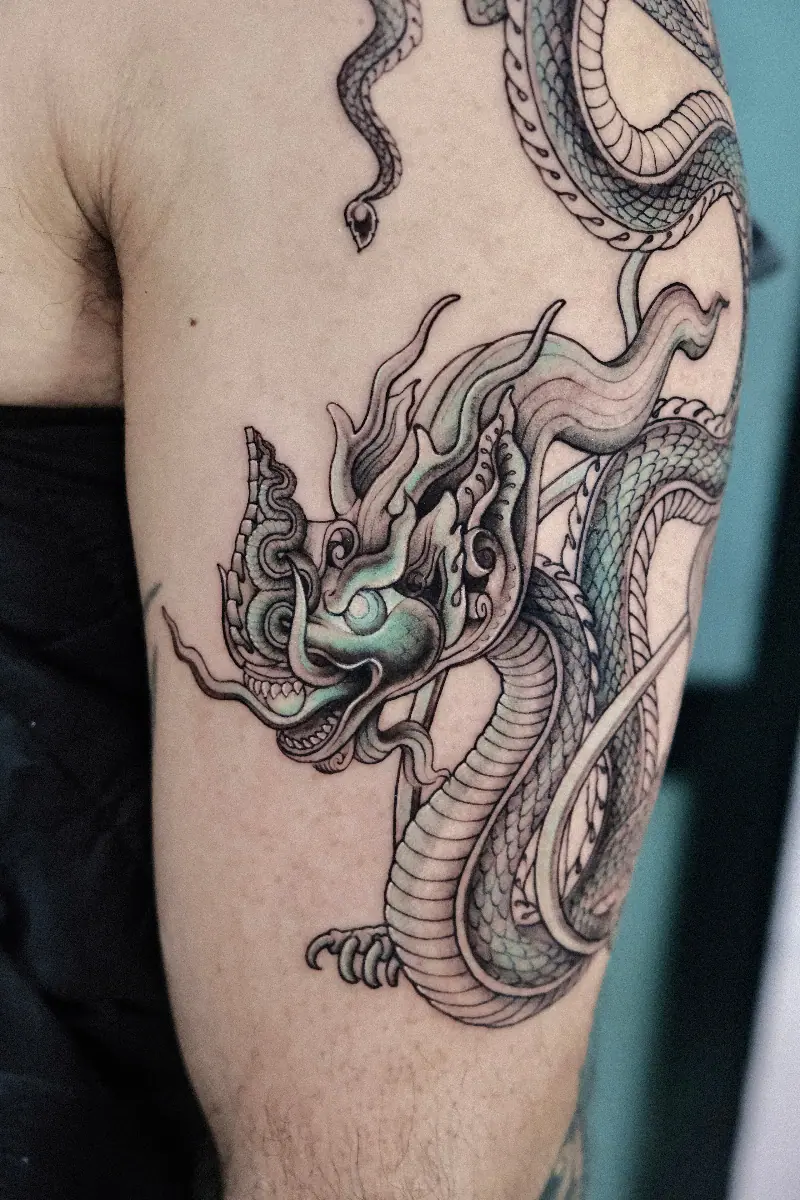
The dragon is arguably the most iconic subject within Asian traditional tattooing. Unlike Western dragons associated with danger, the Asian dragon is a benevolent, celestial figure linked to rain, rivers, and imperial authority. Its long, serpentine body makes it ideal for wraparound placements like the upper arm, full sleeve, or back, allowing the artist to use the body’s natural shape to create movement and flow in the design.
Other Common Motifs
- Tigers — strength, protection, and fearlessness
- Koi fish — resilience and upward transformation
- Phoenix — rebirth and renewal
- Peonies and chrysanthemums — honor, nobility, and longevity
- Waves and clouds — background elements representing nature’s rhythm
Black and Grey vs Full Color Asian Traditional Tattoos
While many people associate Asian traditional tattoos with vivid full-color palettes, black and grey interpretations have become increasingly popular for clients who want the same symbolic depth with a more subtle, wearable finish. A black and grey Asian-style dragon tattoo relies on shading, contrast, and fine linework to create texture in the scales, muscles, and clouds — often with small accent colors, such as green in the eyes or along certain scale sections, added to highlight key details without overwhelming the composition. This approach photographs well, ages gracefully on the skin, and suits clients who want a design that feels bold but not overly saturated.
Popular Placements for Asian Traditional Tattoos
Placement plays a major role in how an Asian traditional tattoo reads visually, since the style depends on flow and directional movement across the body.
Upper Arm and Sleeve Dragon Tattoos
The upper arm is one of the most requested placements for dragon tattoos because it allows the body’s natural curve to guide the creature’s serpentine shape. A well-executed piece wraps around the arm so the dragon appears to circle the muscle, with its head, claws, and tail positioned to create a continuous sense of motion. This placement also works well for clients who may want to extend the design into a half-sleeve or full sleeve later, since the composition can be planned with future additions in mind from the first session.
Learn more about the team behind this work at Su Tran Tattoo Studio.
What to Expect at Sutran Tattoo Studio in Hanoi
Sutran Tattoo Studio, based in Hanoi, specializes in custom Asian traditional tattoo work, including detailed black and grey dragon designs with selective color accents. Every project begins with an in-depth consultation to understand the client’s intent, placement goals, and any symbolic elements they want reflected in the final design.
Our step-by-step guide on how to book a tattoo covers exactly what this consultation includes.
Consultation and Custom Design Process
Rather than using pre-made flash designs, the studio’s artists sketch custom compositions tailored to each client’s body shape and skin tone. For a dragon tattoo intended for the upper arm, this means mapping out how the head, body curves, and tail will sit across the muscle before any linework begins, ensuring the final piece flows naturally when the arm is in motion.
Hygiene and Safety Standards
Sutran Tattoo Studio follows strict hygiene protocols in line with international tattoo safety standards, including single-use needles, sterilized equipment, and disposable barriers for all workstations. Hanoi’s tattoo scene has grown significantly in recent years, and studios that prioritize hospital-grade sterilization and transparent safety practices help set a higher standard for the local industry. Clients are always welcome to ask about sterilization procedures before booking a session.
Artist Expertise in Asian Traditional Style
The studio’s artists have dedicated years to studying Asian traditional tattooing specifically, from linework discipline to shading techniques that give dragons, tigers, and koi their characteristic depth and texture. This specialization matters because Asian traditional tattoos require precise control over negative space, flow direction, and proportion — skills that differ significantly from other tattoo styles like fine line or minimalist work. Working with an artist experienced specifically in this genre helps ensure the final result honors both the technical demands and cultural symbolism of the style.
Not every studio has this depth of experience — check our directory of tattoo artists in Hanoi before booking.
Aftercare for Black and Grey Asian Traditional Tattoos
Proper aftercare is essential for preserving the fine shading and detail work found in Asian traditional pieces, especially large-scale designs like an upper arm dragon.
- Keep the tattoo clean and dry for the first 24–48 hours, following your artist’s specific instructions
- Apply a thin layer of recommended aftercare ointment or fragrance-free lotion once the initial healing barrier forms
- Avoid direct sun exposure, swimming, and soaking the tattoo during the healing period
- Wear loose clothing over the upper arm to prevent friction with fabric
- Schedule a follow-up touch-up session if any areas need refinement after full healing
See our full tattoo aftercare in Vietnam guide for daily care steps.
Frequently Asked Questions
What does an Asian traditional dragon tattoo symbolize?
In Asian tradition, the dragon symbolizes power, wisdom, protection, and control over natural forces like rain and rivers, making it a popular choice for clients seeking strength-themed imagery rather than aggression-themed symbolism common in Western dragon designs.
Is black and grey a traditional color choice for Asian tattoos?
While full-color designs are historically common, black and grey with selective color accents has become a widely accepted modern variation, offering the same symbolic detail with a softer, more versatile finish that suits a range of skin tones and personal style preferences.
How long does an upper arm dragon tattoo take to complete?
Session length depends on size and detail level, but a detailed black and grey upper arm dragon wrap typically requires multiple sessions to complete linework, shading, and any color accent work, with healing time factored in between sessions if needed.
Where can I get an authentic Asian traditional tattoo in Hanoi?
Sutran Tattoo Studio in Hanoi offers custom Asian traditional tattoo design and execution, with artists experienced in dragon, tiger, and koi imagery, alongside strict hygiene practices and a consultation-first approach to ensure each piece is tailored to the client.
Book a Consultation in Hanoi
Whether you’re drawn to a full dragon wraparound on the upper arm or a smaller Asian traditional motif, working with an experienced studio ensures the symbolism, composition, and execution all align with the style’s rich artistic heritage. Sutran Tattoo Studio in Hanoi welcomes clients to book a consultation to discuss custom Asian traditional tattoo designs, from black and grey dragons to full-color folklore-inspired pieces.
RELATED POST

Semicolon Tattoo Meaning: Ideas, Butterfly & Placement
18 October 2026

Crane Tattoo Meaning in Vietnamese & Japanese Art
16 October 2026

Snake Tattoo Meaning: Rebirth, Protection & Ideas
14 October 2026

Phoenix Tattoo: Meaning, Rising Phoenix and Design Ideas
28 September 2026

Watercolor Tattoo: Styles, Design Ideas and How It Ages
25 September 2026

Fineline Tattoo: The Complete Guide to Delicate, Detailed Ink
22 September 2026