

- Home
- Blog
- Tattoo Ideas
- World-Famous Tattoo Styles and Iconic Design Inspiration
World-Famous Tattoo Styles and Iconic Design Inspiration


Some tattoo styles have crossed borders so thoroughly that you’ll find them in studios from Tokyo to Los Angeles to Hanoi, each shaped a little differently by the artist holding the machine. Rather than ranking “the best tattoos in the world” — a claim no single list can honestly make — this guide looks at the styles that have earned genuinely global followings, why they’ve lasted, and how you can use them as a starting point for your own design at Sutran Tattoo Studio.

Traditional Japanese (Irezumi)
Japanese traditional tattooing is one of the oldest continuous styles still practiced today, built on bold outlines, flat saturated color, and large-scale compositions — dragons, koi, guardian lions, and waves are recurring subjects, often filling an entire back, sleeve, or leg as one connected image rather than a collection of separate tattoos. What makes the style endure is its discipline: every element, from the background clouds to the water, follows centuries-old rules about composition and flow, which is why a well-done Irezumi piece still looks intentional decades later.
Guardian lions in particular travel well beyond Japan — variations show up in Chinese, Korean, and Southeast Asian tattoo traditions, each reading the same core symbol of protection and strength through a slightly different linework style. That overlap is part of why Irezumi remains one of the most referenced styles worldwide: the subject matter already carries meaning across several cultures before an artist even picks up the machine.
Black-and-Grey Realism

Realism took off with the rise of tattoo machines capable of smooth gradient shading, and it remains one of the most technically demanding styles to master. Portraits, animals, and photo-accurate scenes are built entirely from black, grey, and white ink, relying on shading rather than outline to create depth — a single forearm sleeve like a lion portrait can take upward of twenty hours to complete.
Fine-Line and Minimalist
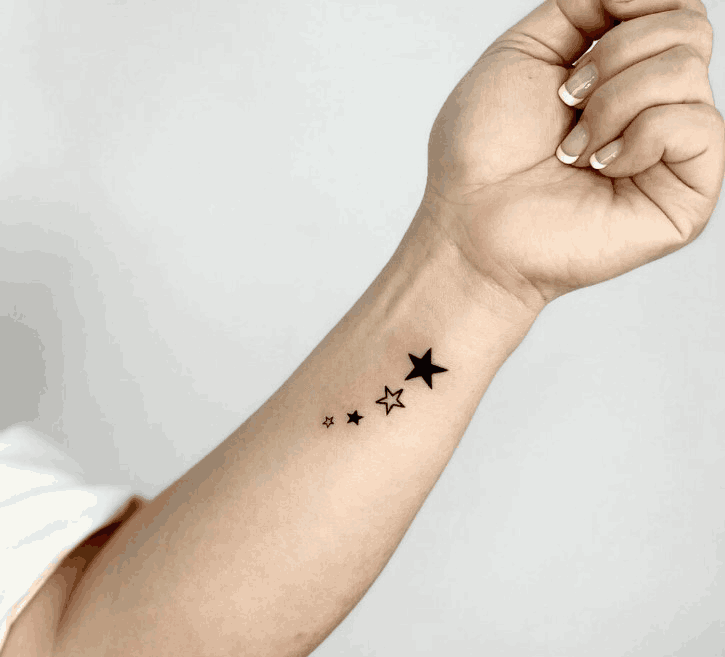
Originating from single-needle techniques popularized across Korea and parts of the US, fine-line tattooing favors thin, precise strokes and generous negative space over bold color or heavy shading. It’s become the default choice for clients who want a tattoo that reads as personal and quiet rather than a statement piece, and it now sits alongside Japanese and realism as one of the three styles requested most often by first-time visitors to our studio.
Old School and Neo-Traditional (American)
Born from sailor and military tattoo culture in the early twentieth century, old-school American tattooing uses thick black outlines, a limited bold color palette, and instantly readable subjects like anchors, roses, swallows, and daggers. Neo-traditional took that foundation and added more detail, shading, and a wider color range, keeping the bold structure but allowing for far more intricate subject matter.
Both versions were built for legibility above all else — a sailor getting tattooed in a dockside shop needed a design that would still look sharp after decades at sea, which is exactly the kind of longevity thick, high-contrast outlines are known for. That same practical logic is why old-school and neo-traditional remain popular choices for anyone who wants a design that reads clearly from across a room, not just up close.
Turning a Global Style Into Your Own Design
None of these styles exist in isolation anymore — plenty of clients now ask for a fusion, like a Japanese-style koi rendered with fine-line detail, or a realism portrait framed with old-school banners. If you’re planning a large-scale piece inspired by Irezumi or realism sleeves, it’s worth checking the full arm tattoo price early, since these compositions are usually built across multiple sessions. When you’re ready to move from inspiration to a real appointment, our team can walk you through how to book a tattoo consultation, and if you’re visiting in person, our tattoo in Ho Chi Minh City studio keeps reference books for every style covered here so you can see real healed work up close.
FAQ
Which tattoo style is best for a first tattoo?
Fine-line and minimalist designs are usually the easiest entry point — shorter sessions, lower cost, and less commitment while you get a feel for the process. Bold styles like Japanese traditional or realism are better suited to clients who already know they want a larger, longer-term piece.
Do these styles age differently?
Yes. Bold-outline styles like old-school and Japanese traditional tend to hold their shape longest because thick black lines resist fading and blurring. Fine-line and photo-realistic shading are more delicate and benefit from touch-ups every few years.
Can different styles be combined in one tattoo?
Absolutely — style fusion is one of the biggest trends in modern tattooing, and an experienced artist can blend, say, fine-line botanicals with a realism portrait, as long as the composition is planned together rather than added piece by piece.
How do I know which style suits me?
Start with lifestyle, not just looks: consider how visible you want the tattoo to be, how much time and budget you can commit to multiple sessions, and how the design will age on your specific placement. A consultation with your artist before booking is the fastest way to match a style to your actual life rather than just a reference photo.
RELATED POST

Phoenix Tattoo: Meaning, Rising Phoenix and Design Ideas
28 September 2026

Watercolor Tattoo: Styles, Design Ideas and How It Ages
25 September 2026

Fineline Tattoo: The Complete Guide to Delicate, Detailed Ink
22 September 2026

Stamp, Lantern & Hand Fan Tattoo: Meaning, Style & Design Guide
21 September 2026

Walk-In Tattoo Hanoi: Same-Day Designs and When to Book
20 September 2026

Asian Big Pieces Tattoo: The Complete Guide to Large-Scale Asian-Style Tattoos
20 September 2026